
PREMIUM CONTENT
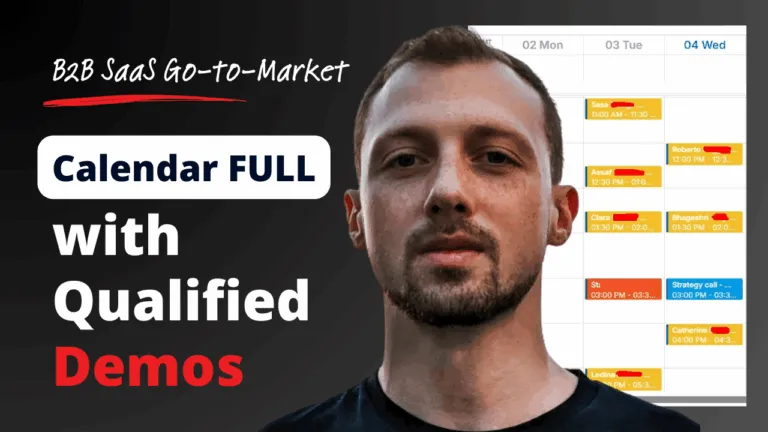
How to Generate 10-40+ Qualified Demos a Month using This B2B SaaS GTM Strategy
Read the Text Version here (7 min)
Are you a B2B SaaS founder struggling to consistently get qualified leads and book demos? Many businesses pour money into ads or wait years for SEO to catch up, only to see minimal results. It's frustrating to invest so much time and resources without a clear path to growth.
This guide outlines a powerful, capital-efficient strategy designed to generate a steady stream of qualified demos...
It focuses on core principles that work regardless of your current marketing budget or stage of growth. By understanding and implementing these four key components, you can build a predictable system for acquiring new customers.
THE FOUR PILLARS OF A SUCCESSFUL OUTREACH SYSTEM
To build an effective system for booking demos, you need four interconnected parts working together. If any one of these pieces is weak, your entire system will suffer.
● Your Prospect List: Who are you trying to reach?
● Your Outreach Channels: How will you contact them?
● Your Offer and Messaging: What will you say to get their attention?
● Your Follow-Up System: How will you turn interest into action?
Let's explore each of these in detail.
BUILDING A HIGHLY TARGETED PROSPECT LIST
The foundation of any successful outreach is a precisely defined list of potential customers. Not all prospects are created equal, and focusing on the right ones is crucial.
Defining Your Ideal Customer Profile
Start by identifying the segments of your market that value your solution the most and are willing to pay the most for it. Be specific about:
● Job titles
● Industry
● Company size and revenue
● Their daily problems and desired outcomes
● The tools they currently use
● How they measure success
You can document this information in a simple spreadsheet or a note-taking app. The key is to have a clear picture of who you're targeting.
Rating Potential Niches
Once you have a broad understanding of potential customer segments, rate them based on these criteria:
Problem: Do they have a significant and frequent problem that your product solves?
Access: How easy is it to reach decision-makers in this niche online?
Financials: Can they afford and are they willing to pay for your solution?
Familiarity: Do you have experience or knowledge in this niche?
Social Proof: Do you have existing case studies or testimonials from this niche?
Sales Cycle: Is the decision-making process short or long?
Use a simple scoring system (e.g., 0 for no, 1 for okay, 2 for great) to rank each niche. This helps you prioritize where to focus your initial efforts.
Expert Tip: Don't get bogged down in perfection. The goal is to identify niches with the best potential and commit to testing them for at least three to six months. Think of it like fishing: you might try different bait (messaging) in different spots (niches) until you find where the fish are biting.
CHOOSING AND OPTIMIZING YOUR OUTREACH CHANNELS
With your target list in hand, you need effective ways to connect with them. For B2B SaaS, cold email and LinkedIn are generally the most powerful channels.
Mastering Cold Email Outreach
Cold email can be incredibly effective if done correctly. It requires a solid infrastructure to ensure your messages reach the inbox and don't get marked as spam.
Setting Up Your Email Infrastructure
● Separate Domains: Never send cold emails from your main company domain. Create new, related domains (e.g., try[yourcompany].com, get[yourcompany].io) to protect your primary brand reputation.
● Email Accounts: Each domain can support multiple email accounts. A common setup is 3-4 accounts per domain.
● Automation Platform: Use a dedicated cold email platform like Instantly or Smart Leads. These tools manage sending, warming up accounts, and tracking.
● Email Service Providers: Stick with trusted providers like Google Workspace or Microsoft 365. Avoid cheaper, less reliable options that can lead to accounts being burned.
● Warm-Up: Crucially, warm up your email accounts for 14-30 days before sending live campaigns. This builds a sending reputation. Start with a very low volume (5 emails per account per day) and gradually increase it.
Expert Tip: A good rule of thumb is that each email account should send a maximum of 30 emails per day. With 20 accounts across a few domains, you can comfortably send 600 emails daily, scaling up as needed.
Crafting Effective Email Copy
Your email needs to grab attention quickly. A proven structure includes:
1) Introduction & Reason for Reaching Out: Briefly state who you are and why you're contacting them.
2) Offer/Solution: Clearly present how you can help.
3) Proof/Risk Reversal: Back up your claims with social proof or a guarantee.
4) Call to Action (CTA): Tell them what you want them to do next.
5) P.S. (Optional): Add a final compelling point or offer.
Example:
"Hey John,
I noticed [Company Name] has a 3.9 rating on Trustpilot. As Marketing Manager, I wanted to reach out.
We help e-commerce brands with over 1000 reviews get 5-10% more verified reviews each month by leveraging features Trustpilot doesn't offer natively.
Would you be open to a quick 3-minute video explaining how this works for your brand? We recently helped [Client Example] get over 1000 additional reviews in 60 days while saving them $7K/year.
Best, [Your Name]"
Expert Tip: Focus on making your offer irresistible. Instead of just pitching your product, reposition it as a solution to a specific problem or a way to achieve a desired outcome. Highlight benefits and results, not just features.
Leveraging LinkedIn Outreach
LinkedIn is a powerful complementary channel.
Optimizing Your Profile
● Ensure your personal and company profiles are fully optimized for your target audience.
● Use a professional banner, a clear headline that states who you help, and a compelling description.
● Include social proof like testimonials or case study links.
Automating Your Outreach
● Use LinkedIn automation tools (e.g., Expandi, LeadConnect) to manage connection requests and messages.
● Adapt your email messaging for LinkedIn, making it shorter and more concise.
● Focus on your highest quality prospects due to LinkedIn's connection limits.
Expert Tip: While manual outreach is possible, automation tools save significant time and allow for better tracking and optimization of your campaigns.
DEVELOPING AN IRRESISTIBLE OFFER AND MESSAGING
Simply stating what you do isn't enough. Your offer needs to be compelling enough to cut through the noise.
Repositioning Your Product as an Offer
Think about how you can present your existing product or service in a way that creates demand. This often involves:
● Highlighting specific outcomes: Instead of "our tool does X," say "our tool helps you achieve Y result."
● Adding value: Can you offer a free report, a quick assessment, or a limited-time bonus?
● Guaranteeing results: If possible, offer a money-back guarantee or a performance-based outcome.
Example:
Instead of: "We built a tool that helps e-commerce companies generate more reviews."
Try: "We help e-commerce brands with over 1000 reviews get 5-10% more verified reviews each month guaranteed by leveraging [specific features] that Trustpilot doesn't offer natively."
Expert Tip: Your offer should be so valuable that prospects feel they'd be missing out if they didn't engage. Test different angles and messaging to see what resonates most with your target audience.
Writing Effective Cold Email Copy
Use proven templates as a starting point. A common structure is:
1) Intro + Reason for Reaching Out
2) Offer/Solution
3) Proof/Risk Reversal
4) Call to Action
5) P.S.
Key Considerations:
● Plain Text Emails: Use plain text to improve deliverability. Avoid links in initial emails.
● Short Sequences: Keep your follow-up sequences concise (3-7 steps is often sufficient).
● Test Subject Lines: Aim for open rates above 50%. If yours are lower, test different subject lines and preview text.
● Focus on Responses: Once deliverability is confirmed (open rates are good), disable open rate tracking to further boost inbox placement. Focus on positive response rates and demo bookings as your primary metrics.
Expert Tip: Don't be afraid to test different calls to action. If "book a demo" isn't working, try offering a valuable piece of content like a white paper or a short video in exchange for a reply.
IMPLEMENTING A ROBUST FOLLOW-UP SYSTEM
The majority of demos and sales come from effective follow-ups. Many interested leads won't book a call on their own.
Turning Interest into Action
● Respond Quickly: Aim to respond to initial inquiries within minutes, or at most a few hours. Speed is critical.
● Provide Value, Maintain Curiosity: When sharing more information, don't give away everything. Leave them wanting to learn more on a call.
● Frame the Call Benefit: Clearly state what the prospect will gain from the call (e.g., unique insights, a custom plan, a free assessment).
● Make Booking Easy: Offer to book the call for them manually, or provide a clear booking link as a secondary option. Avoid making them do all the work.
Example Follow-Up:
"Hey John,
Did you have a chance to review the video I sent? Any questions I can answer?
Alternatively, would you be open to a quick call next Monday or Tuesday to explore how we can help [Company Name] increase your main metric?
Best, [Your Name]"
Following Up Consistently
● Timely Cadence: Follow up within 3 business days, then 5 days, then 7 days. After that, consider touching base every 2-4 weeks.
● Relevant and Personalized: Don't send generic follow-ups. Reference previous conversations or their specific needs.
● Multi-Channel Approach: If they responded to an email, consider following up via LinkedIn or even a phone call if appropriate.
● Raise the Stakes: On follow-ups, you can offer additional value, like a custom plan or a Loom video walkthrough, to make the call more appealing.
Expert Tip: The majority of your demos and sales will likely come from these follow-up sequences. Be persistent, provide value, and make it easy for prospects to engage.
Practical Application: Step-by-Step Guide
1) Define Your Ideal Customer Profile: Document their job titles, industry, pain points, and goals.
2) Identify & Rate Niches: Use the criteria provided to select 2-3 promising niches to test.
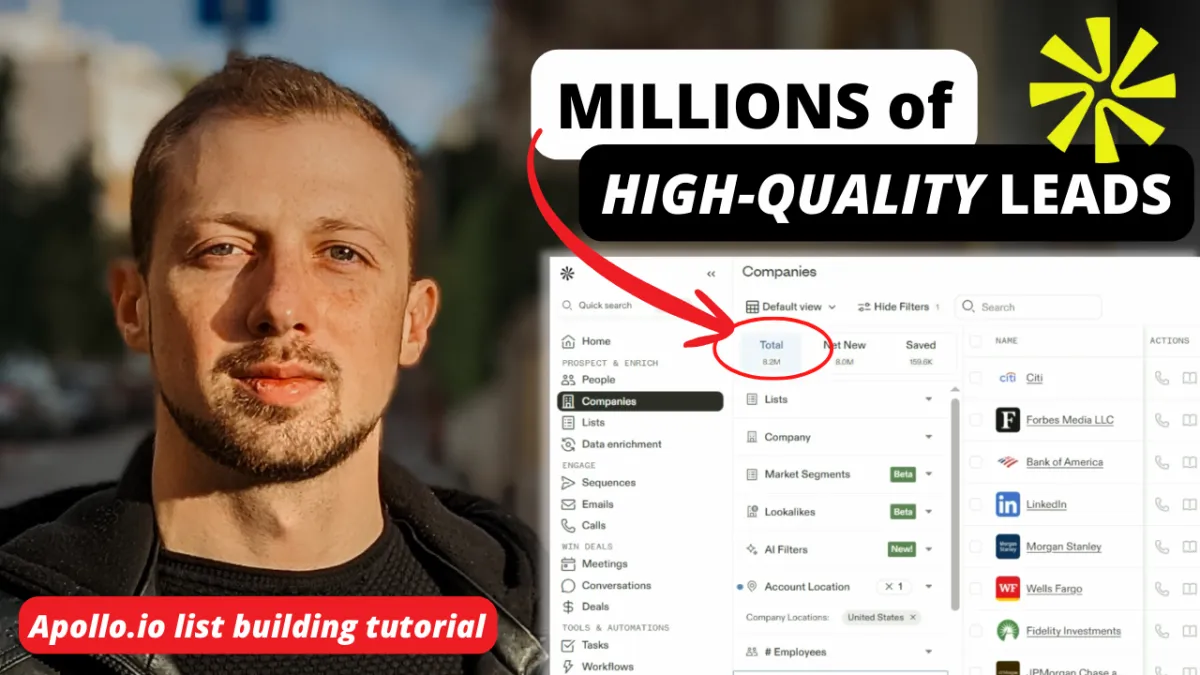
3) Build Your List: Use a lead database tool (like Apollo.io's free tier) to find at least 3,000 prospects per niche.
4) Verify Emails: Use an email verification tool to clean your list and avoid high bounce rates.
5) Clean Company Names: Use a tool like Clay to normalize company names for better personalization.
6) Set Up Email Infrastructure: Create separate domains, email accounts, and set up a cold email automation platform. Warm up your accounts for 2-4 weeks.
7) Craft Your Offer & Messaging: Reposition your product as an irresistible solution. Write 2-4 variations of your initial email and follow-up messages.
8) Launch Campaigns: Start sending emails at a low volume and gradually increase. Monitor open rates initially, then focus on response rates and demo bookings.
9) Optimize LinkedIn: Optimize your profile and use automation tools to connect with prospects.
10) Manage Follow-Ups: Implement a consistent and personalized follow-up sequence for all interested leads.
11) Analyze & Iterate: Track your results, identify what's working, and continuously refine your list, offer, and messaging.
CONCLUSION
Building a predictable lead generation system takes effort, but it's achievable with a strategic approach. By focusing on a well-defined prospect list, optimized outreach channels, a compelling offer, and consistent follow-ups, you can consistently book qualified demos. This method is the most capital-efficient way to validate your product-market fit and acquire your first customers without breaking the bank. As you scale, the learnings from this system can be applied to paid advertising, content marketing, and other growth initiatives.
FAQ
● What if I have a service-based business instead of SaaS?
While this strategy is optimized for B2B SaaS, the core principles of list building, targeted outreach, and offer refinement can still be applied to service businesses. You may need to adjust the specific channels and messaging to fit your industry.
● How much does this cost to set up?
The initial setup can be very low-cost. Many lead databases and email automation tools offer free tiers or affordable starting plans. The primary investment is your time and effort in research and campaign management.
● How long does it take to see results?
With consistent effort and proper setup, you can start seeing initial responses and demo requests within a few weeks. Significant, consistent results typically emerge after 1-3 months as you refine your campaigns and learn what works best for your specific market.
More Premium Content
Ready For The Next Step?
Book Your Free SaaS Consult!
Copyright 2026 All Rights Reserved
This site is not a part of the Meta™ website or Meta™ Inc. Additionally, this site is NOT endorsed by Meta™ in any way. Meta™ is a trademark of Meta™, Inc.



Copyright 2026 All Rights Reserved
This site is not a part of the Meta™ website or Meta™ Inc. Additionally, this site is NOT endorsed by Meta™ in any way. Meta™ is a trademark of Meta™, Inc.