
PREMIUM CONTENT
How to Create Solid SaaS Case Studies to Win New Clients Faster
Read the Text Version here (4 min)
Let’s be honest: in the B2B SaaS world, everyone on the internet is a scammer until proven otherwise.
If you’re reaching out to cold prospects, they don't know you, they don’t trust you, and they certainly don't care about your shiny new feature list. If you rely purely on your network to close deals, you can get away without deep proof. But the moment you try to scale out into the cold market, you’ll face a mountain of skepticism.
Without solid case studies, you’re forced to overcompensate. You'll find yourself doing endless custom work, offering massive discounts, or burning out your sales team with an insane volume of outbound outreach just to land a single client.
But when you have a case study that clearly proves the financial impact of your product? Your marketing and sales conversion rates skyrocket.
Here is the exact framework we use to help B2B SaaS founders structure, generate, and leverage case studies to win new clients faster.
The Psychology of a B2B Sale: Claims vs. Proof
When a potential customer evaluates your SaaS solution, their decision hinges on two primary factors:
1. The Boldness of the Claim:
What is the exact transformation you are promising? (e.g., “We help you add $1,000 in MRR in 90 days via our referral system.”)
2. Elements of Proof:
What evidence do you have to back up that bold claim?
If you bury your transformation promise in a generic list of features and expect prospects to "connect the dots" themselves, you're leaving money on the table. You need a bold claim right at the top of your page, and you need ironclad proof right below it.
Generic quotes like "Working with this software was really cool!" are not case studies. That’s a testimonial. It’s better than nothing, but it won’t crack cold traffic. A real case study requires data.
The 3 Metrics That Actually Matter in B2B SaaS
You might think your software is different. Maybe you sell an HR tool that improves employee satisfaction, or a time-tracker for remote teams. You’re wondering, "How do I tie that to a hard metric?"
In 99.9% of B2B cases, your metrics must tie back to one of three things:
● money generated (increased revenue/ARR/MRR)
● money saved (reduced overhead/ad spend/churn)
● time saved (which ultimately reduces labor costs and increases output)
If you dig deep enough, even employee satisfaction ties back to revenue through higher retention rates and increased output per employee. Find the business metric, measure it, and make it the hero of your story.
The Anatomy of a Perfect SaaS Case Study
The most effective structure for a SaaS case study follows a simple, high-converting headline formula:
How We Helped [XYZ Company] Achieve [X Result] in [Timeframe] [Optional: Without Doing An Uncomfortable/Annoying Thing]
To make the page highly scannable and visually convincing, your case study layout should always include:
● The Client’s Identity: Company logo, contact person's name, picture, and industry.
● The Problem: The specific, painful bottleneck they faced before they found you.
● The Transformation: Clear "Before vs. After" data points.
● "Value Shots": Real screenshots of the product dashboard, setup, or customer calendar to prove the results are authentic.
● A Video Testimonial: The holy grail of social proof.
How Top Brands Do It
Look at established SaaS players that used this exact strategy to fuel their early growth:
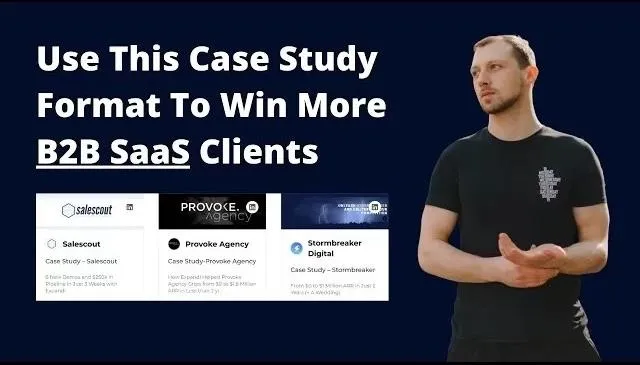
● Expandi (LinkedIn Automation) leads their landing page with case studies like: "How Expandi helped Provoke Agency grow from $0 to $1.8M ARR in less than 2 years." They back it up with screenshots of the actual campaigns and account setups.
● Calendly showcases enterprise value with metrics like: "50% faster strategic customer projects" for ClickUp.
● Apollo.io hooks prospects with clear, quantifiable headers: "How Customer.io skyrocketed sales qualified leads by 70%."
Step-by-Step: How to Extract Case Studies From Your Clients
Don’t wait around hoping your users will write a case study for you. They won't — they're too busy running their own businesses. You have to take control of the process.
Step 1: Collect "Value Shots" from Day One
The moment you onboard a client, start tracking their data. If they send you an enthusiastic email saying, "Hey, we just had our biggest week ever!" — screenshot it. Document their progress throughout your entire relationship so you have a repository of data ready to go.
Step 2: Target Your Best Customers
Like attracts like. If you want to sign more dream clients, showcase the success stories of your current dream clients. Reach out to them when they are happiest — ideally right after a successful update or a major milestone breakthrough.
Step 3: Do All the Heavy Lifting
When you ask a client for a case study, use this exact framing: "We will do 100% of the work, you just need to approve it." Draft the case study yourself using the problem-solution-results format, send it over, and ask for a simple thumbs-up or thumbs-down.
Pro Tip: For self-serve SaaS models where you don't have a tight personal relationship with users, offer an incentive. A free month of software, an account credit, or a gift card works wonders for getting people to share their data.
Step 4: Capture a 2-Minute Video Testimonial
Video is the next best thing to having your prospect talk to your client in person. Use a tool like VideoAsk to send a link where the client can quickly record a response from their phone.
Ask them to answer these three questions honestly:
1. What were your results and how did you feel before using our product?
2. What are your results and how do you feel now?
3. What would you say to someone who is currently on the fence about signing up?
Step 5: The "Down-Sell" Strategy
If a client rejects your request for a video testimonial (often due to privacy or camera shyness), immediately downgrade your ask: "No worries at all! If a video doesn't work, would you be open to leaving us a quick written review on G2 or Capterra instead?" Because they already felt bad saying no to the video, they will almost always say yes to the text review.
Future-Proofing Your Social Proof
To make this seamless moving forward, bake the case study clause right into your onboarding terms or client agreements. Pre-frame the relationship so that when you hit certain performance benchmarks, you have the right to share the success story.
Finally, build a simple database in a tool like Notion to document your wins.
Track the client name, their industry, the "before" state, the "after" state, and their direct quotes.
Final Thoughts
In today's hyper-competitive market, if you don't have a case study, it’s almost like you don’t have a real business. Stop just talking about your value — start showing the evidence.
If you already have at least one solid B2B SaaS case study and want an expert to personally build, manage, and optimize your client acquisition system on a performance basis, head over to saasgrowthagency.com and apply to work with us today.
More Premium Content


Ready For The Next Step?
Book Your Free SaaS Consult!
Copyright 2026 All Rights Reserved
This site is not a part of the Meta™ website or Meta™ Inc. Additionally, this site is NOT endorsed by Meta™ in any way. Meta™ is a trademark of Meta™, Inc.



Copyright 2026 All Rights Reserved
This site is not a part of the Meta™ website or Meta™ Inc. Additionally, this site is NOT endorsed by Meta™ in any way. Meta™ is a trademark of Meta™, Inc.